
Scroll
Just Results, Just Reviews
Rated on
REVIEWS

100% success rate
 Verified profile
The free AI Visibility Audit, exactly what you get
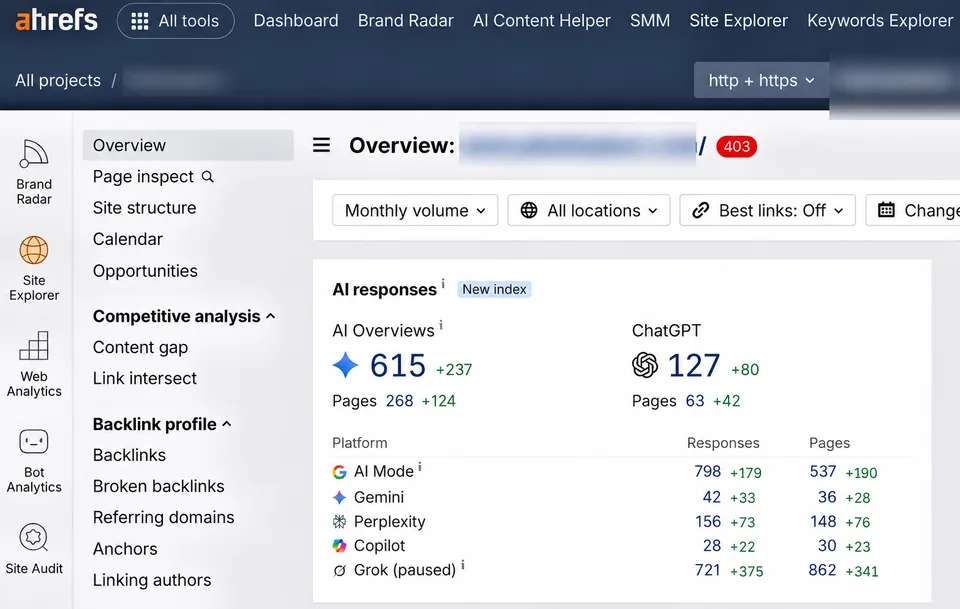
- Where your brand shows up today across ChatGPT, Perplexity, Gemini, Copilot, and Google AI Overviews for 20 real buyer prompts in your category
- An extractability scan: what AI crawlers can and cannot read on your site right now
- Your robots.txt and schema, reviewed line by line, with the exact fixes written out
- Five priority actions ranked by effort and impact, yours to keep
AI SEO services for ecommerce, in plain terms
Just Lead Market is an AI SEO agency for ecommerce brands in the US and UK. We handle generative engine optimization (GEO), answer engine optimization (AEO), and Google AI Overviews so that AI assistants cite and recommend your store when buyers ask. The work covers prompt research, answer-first content, schema, crawl access for AI bots, and measurement in GA4. The agency is run by founder Abdul Rauf Ali from Brooklyn, NY, and it is the same team behind our Google Ads and CRO accounts. That matters: our AI visibility targets come from queries that already convert, not from mention counts.
GEO, AEO, AI SEO: different names, one job
The industry has not settled on a name yet, so you will see five terms for overlapping work:
AI SEO
The umbrella: making a brand visible in AI-driven search results and assistant answers.
Generative engine optimization (GEO)
Targets AI systems that write answers: ChatGPT, Gemini, Claude, Perplexity.
Answer engine optimization (AEO)
Structures content so engines can lift direct answers from it.
AI search optimization
Usually means Google AI Overviews and AI Mode specifically.
AI visibility
The measurement side: where you appear, how often, and in what context.
We treat them as one service because the inputs overlap almost completely. A page that is crawlable, answer-first, schema-backed, and corroborated by third parties does well across all five labels. Traditional SEO still matters underneath it all, and if your organic foundation is the gap, start with our ecommerce SEO services instead.
The engines we optimize for, and how each one decides
Google AI Overviews and AI Mode
What it rewards
Pages already ranking well, structured so a passage can be lifted cleanly
What we do
Answer-first blocks, passage-level headings, FAQ and Service schema
How we measure
GSC impressions, AI Overview presence checks on your money queries
ChatGPT with search
What it rewards
Pages its retrieval bot can fetch, plus a healthy Bing index
What we do
Allow OAI-SearchBot and ChatGPT-User, Bing Webmaster setup, visible facts
How we measure
chatgpt.com referrals in GA4, monthly prompt spot checks
Perplexity
What it rewards
Fresh, source-dense pages with numbers worth citing
What we do
Citable stats on page, reviews rendered in HTML, clean publish dates
How we measure
perplexity.ai referrals, citation checks on tracked prompts
Gemini
What it rewards
Google's index plus unambiguous entity data
What we do
Entity consistency across site, GBP, and schema
How we measure
gemini.google.com referrals, brand prompt checks
Copilot
What it rewards
The Bing index, again
What we do
Bing indexation, IndexNow pings on updates
How we measure
copilot.microsoft.com referrals
One honest line that stays on this page: nobody can guarantee a citation in any of these engines. Anyone who promises one is guessing. What we control is whether your pages are eligible, extractable, and corroborated. That moves the odds. The measurement tells us if the odds moved.


Deliverables, grouped the way we work
Audit and strategy
- AI visibility baselineAnalyst · M
- 20-prompt buyer query mapAnalyst · M
- Competitor citation scanAnalyst · S
- Priority fix roadmapBrand · S
Content and entities
- Answer-first page rewritesBrand · L
- Facts Blocks on money pagesBrand · S
- FAQ sets from real promptsBrand · M
- Entity consistency passBrand · M
- Citable stats sourcingBrand · M
Technical AI readiness
- robots.txt bot policyDev · S
- Rendered-HTML fixesDev · L
- Schema build and QADev · M
- Bing and IndexNow setupDev · S
- llms.txt (experimental)Dev · S
- Review markup visibilityDev · M
Authority and corroboration
- Directory and profile auditAnalyst · S
- Review velocity planBrand · M
- Third-party mention planBrand · M
Measurement and reporting
- GA4 AI referral channelAnalyst · S
- Monthly prompt trackingAnalyst · S
- Citation change logAnalyst · S
- Plain-English monthly noteBrand · S
How the work runs, stage by stage
Baseline
We record where AI engines see you today. Twenty buyer prompts, five engines, screenshots and a log. We also run the extractability scan: fetch your pages the way AI bots do and note what is invisible. Most stores fail here on client-side rendered reviews and thin product descriptions. Why this matters: you cannot claim progress without a dated starting point.
Prompt and query mapping
Our SEO targeting starts from Conversion-Backed Keyword Mapping, the method on our ecommerce SEO page: keywords chosen from paid search queries that already produced revenue. For AI SEO we extend it. We rewrite those converting queries as the prompts a buyer would type into an assistant, then map each prompt to the page that should earn the citation. Demand data first, guesswork never.
Citation-ready architecture
robots.txt opened to retrieval bots, schema built page by page, facts rendered in plain HTML, one clear answer near the top of every target page. This is unglamorous work. It is also where most of the movement comes from.
Answer-first content and corroboration
We rewrite target pages so the first 100 words answer the prompt, add the numbers and specifics engines like to quote, and fix the off-site record: profiles, directories, and review sources that engines cross-check before trusting a brand.
Measure, then iterate
GA4 gets a dedicated AI referral channel group on day one. Monthly, we rerun the prompt set, log citation changes, and reallocate effort to whatever moved. Risk we plan for: engines change retrieval behavior without notice. Mitigation: we optimize the durable inputs (crawlability, structure, corroboration) rather than any single engine's quirk of the month.
How AI engines pick what to cite
This is the logic behind every deliverable above. It is also the part most agencies skip explaining.
They retrieve before they answer
For shopping and vendor questions, assistants mostly search the live web, read a handful of pages, and compose an answer from them. Getting into that handful is the game. Training data matters less than people assume for commercial queries.
If a bot cannot fetch a page, it cannot cite it
Retrieval bots identify themselves: OAI-SearchBot and ChatGPT-User for OpenAI, PerplexityBot for Perplexity, Claude-SearchBot for Anthropic. Blocking those in robots.txt removes you from consideration. Training crawlers such as GPTBot, ClaudeBot, and CCBot are a separate decision about your content and IP. The distinction matters and most robots.txt files get it wrong in one direction or the other.
Rendered HTML wins
AI extractors read static HTML. Reviews, spec tables, and trust badges injected by JavaScript after load are invisible to most of them. We keep finding this on ecommerce sites, including pages that look complete in a browser.
Answer-first structure gets quoted
Engines lift passages, not pages. A direct answer in the first 100 words under a matching heading is liftable. Twelve paragraphs of warm-up are not.
Facts they can use without interpreting
Numbers with units, dates, prices, named platforms. A visible Facts Block gives an engine safe material to quote and attribute. Vague copy gives it nothing.
Schema removes ambiguity
Organization, Service, Product, and FAQPage markup tells engines what a page is about and who is behind it, in a format built for machines. It will not rescue weak content. It reliably helps strong content get understood.
Corroboration off your site
Engines cross-check. A brand with consistent details across its site, Google Business Profile, directories, and real reviews reads as safe to recommend. A brand that exists only on its own domain reads as a risk.
llms.txt, honestly
An emerging convention for pointing language models at your key pages. Evidence that it changes outcomes is thin so far. It costs a few minutes, so we add it and label it in reporting as an experiment, not a lever.
Tested here first
Every rule above is live on justleadmarket.com. Our robots.txt welcomes the retrieval bots. Money pages are prerendered so extractors see full HTML. Each service page carries a visible Facts Block and layered JSON-LD.
Client-side, the deepest work so far is on a UK furniture retailer: product and organization schema built out, review markup made visible to crawlers, and answer-first rewrites on the money pages. Client name appears in the logo strip and case study card, not here, per our own content rules.
A fit check before you fill the form
Four fits we see most, backed by the client reviews on our results pages.
DTC brands already running paid traffic
Your ad account holds the converting queries. That data makes AI SEO targeting sharper and cheaper, and it is the setup we know best.
Shopify and ecommerce stores losing clicks to AI answers
Traffic flat, impressions fine, buyers getting answered before the click. This service exists for that pattern, and our Shopify development team ships the fixes.
B2B and trade manufacturers
Procurement teams ask assistants for supplier shortlists now. Structured specs and corroborated company data get you onto them.
UK brands especially
Most of our current schema and SEO work runs on UK stores, and the UK AI SEO market is younger than the US one. Home ground for us.
How this differs from the SEO you already know
| Traditional SEO | AI SEO | |
|---|---|---|
| Unit of success | Rankings and organic sessions | Citations, mentions, AI referral sessions |
| Where it shows up | Google and Bing results pages | ChatGPT, Perplexity, Gemini, Copilot, AI Overviews |
| Primary inputs | Content, links, technical health | Extractability, structure, corroboration |
| Measurement | GSC, GA4 organic | GA4 AI referral channel, prompt tracking |
| Timeframe | Months | Weeks to months, engine-dependent |
The overlap is large on purpose. Strong SEO makes AI SEO easier, because most engines lean on search indexes to retrieve. You need both. This page is the AI half. The organic half lives on our ecommerce SEO services page, and our conversion rate optimization team picks up the sessions either one sends.
Why brands pick us for this
Targets come from paid data
Prompts mapped from queries that already converted in your ad account.
Founder runs the account
Abdul is in the work, not just the pitch. Ask him anything on the first call.
Tested on our own site
Every tactic on this page is live on justleadmarket.com before we sell it.
Ecommerce depth, US and UK
Furniture, home, DTC. We know the SERPs and the prompts in these lanes.
Schema done properly
Built, validated, and matched to visible content. No markup theater.
Measurement before tactics
The GA4 channel and prompt log exist before the first optimization ships.
Facts block
| Service | AI SEO: GEO, AEO, AI Overviews optimization |
|---|---|
| Ideal for | Ecommerce and DTC brands, B2B trade suppliers |
| Markets | US, UK |
| Platforms | ChatGPT, Perplexity, Gemini, Copilot, Google AI Overviews |
| What we improve | AI citations, AI referral sessions, answer eligibility |
| Typical first wins | robots.txt bot policy, rendered-HTML fixes, Facts Blocks, schema QA |
| Proof available | Own-site implementation |
| Founder | Abdul Rauf Ali, Brooklyn, NY |
| Last updated | 2026-07-05 |
AI SEO questions, answered straight
Didn’t find what you’re looking for?
See where AI engines put you today
Just Free AuditOne audit, five engines, twenty prompts, and a fix list you keep. Within one business day we confirm scope and request read-only access, then the visibility scan runs across all five engines. No obligation at any step. Want the track record first? See our case studies.
Why Brands trust Just Lead Market
Just measurable results. No Fluff
