












Scroll
Just Results, Just Reviews
Rated on
REVIEWS

100% success rate
 Verified profile


The Just Free Audit, tuned for supplement and wellness brands
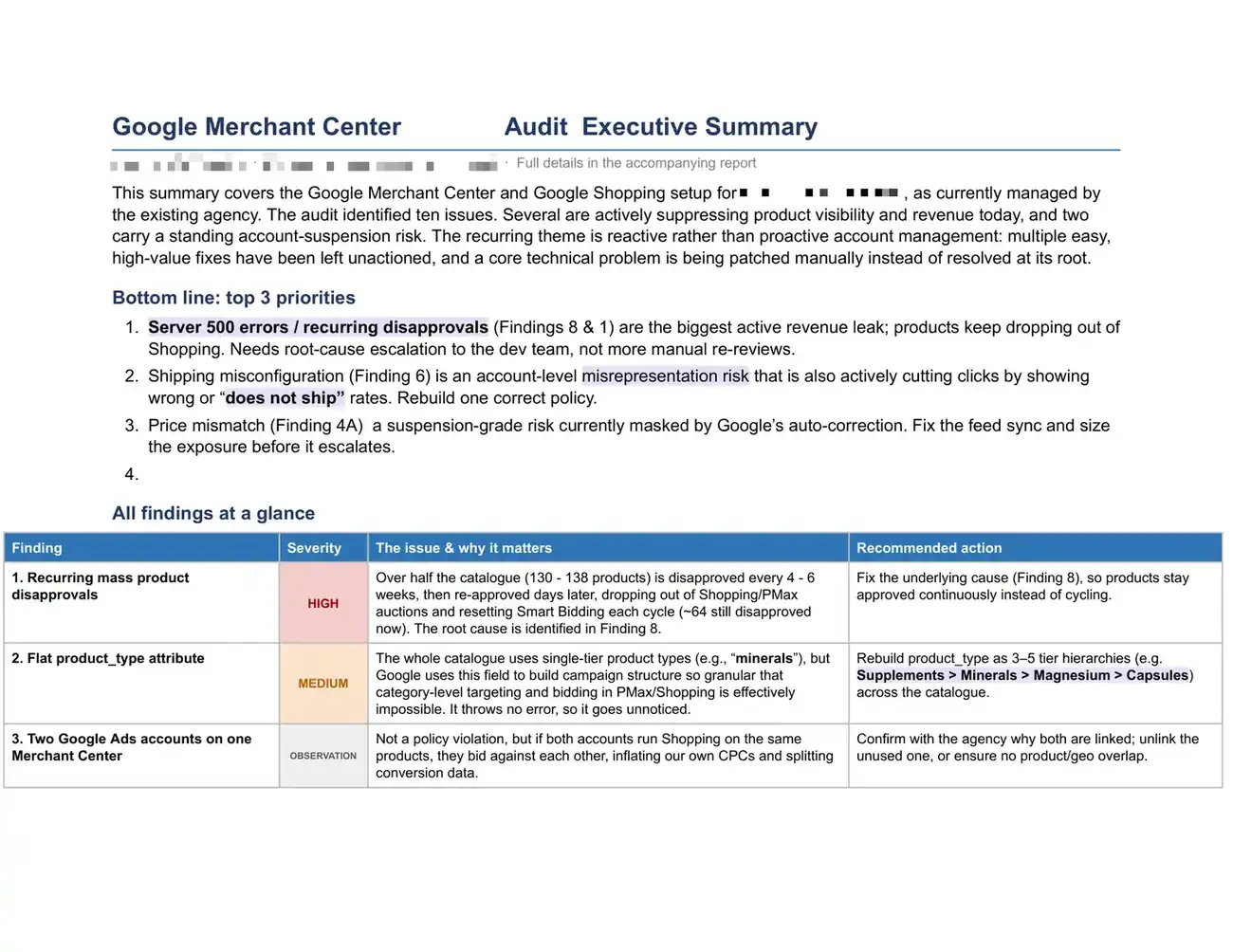
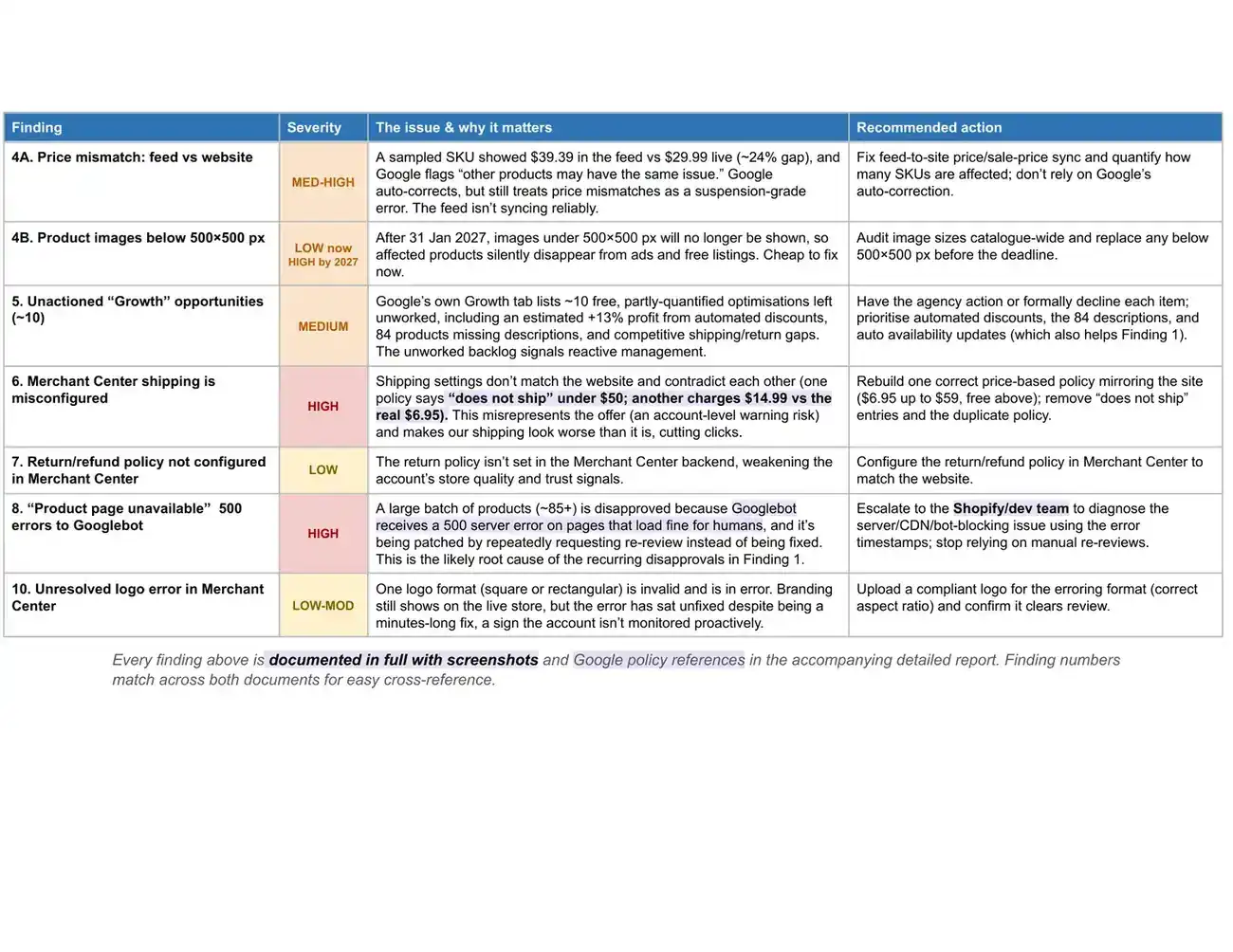
- A Merchant Center and feed pass on your SKUs: titles, product types, GTINs, and the page-to-feed mismatches that cause disapprovals
- A claim-risk read on your top product pages: wording that puts the ad account at risk, with label-aligned alternatives
- A tracking check: purchase, subscription, and repeat-order events in GA4 and Google Ads, plus Enhanced Conversions status
- A search term waste scan with a starter negative keyword map
- Your subscription vs one-time revenue split, and what it changes about your bidding targets
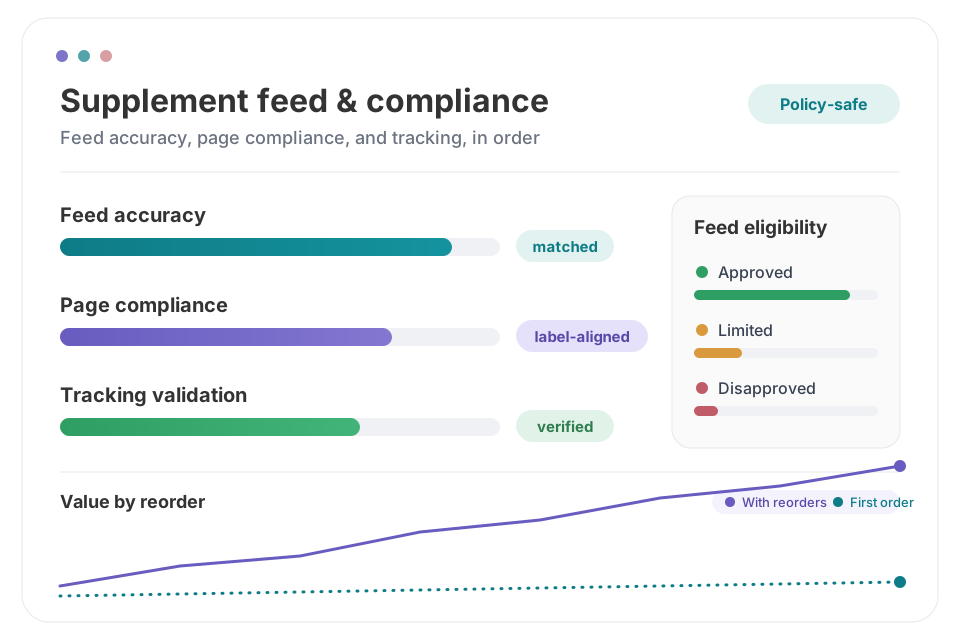
Just Lead Market is a health and wellness marketing agency for ecommerce brands that sell ingestible products: supplements, vitamins, nutraceuticals, functional nutrition, and sports nutrition. We work with DTC stores in the US and UK. The work runs in a fixed order: Merchant Center and product feed accuracy, product page compliance, tracking validation, campaign structure by category and intent, then scale across Search, Shopping and Performance Max, YouTube, and remarketing. The goal is paid growth that survives policy review and prices customers on repeat purchase economics, not the first order alone. We do not market spas, gyms, clinics, or practitioners.
Who this is for
- DTC supplement brands with proven products and an ad account that keeps hitting disapprovals, limited serving, or a suspended feed.
- Wellness ecommerce stores where subscribe and save exists on the site but the campaigns still bid like every order is a one-off.
- Sports nutrition and functional nutrition brands that want scale without wording that puts the whole account at risk.
- Prenatal, gut health, collagen, sleep, and daily vitamin brands with strong reorder rates and tracking nobody fully trusts.
- US or UK stores on Shopify, WooCommerce, or WordPress with a live Merchant Center feed.
Compliance first, then scale
Most agencies in this category start with campaigns. We start with the reasons campaigns get shut down. The working order is fixed, and it came out of real supplement account work, not a slide deck.
Merchant Center and product feed accuracy
Titles, product types, identifiers, pricing, and availability have to match the site exactly. Feed-to-page mismatches are the quiet killer in supplement accounts. We fix the feed before we touch a bid.
Product page compliance
Copy stays aligned with what is on the label. The recurring risk patterns we see: disease and treatment wording, promised-results wording, benefits the label does not support, and missing trust or disclaimer pages. We rewrite toward wellness-support language and keep the standard supplement disclaimer where it belongs.
Tracking validation
Purchase events, add to cart, begin checkout, subscription actions, and Google Ads conversions with Enhanced Conversions where possible, checked in GA4 before spend scales. If revenue attribution is wrong, every decision downstream is wrong.
Campaign structure by category and intent
Search terms split by product category and buyer intent, brand separated from non-brand, and budgets set per category, not per vibe.
Scale across Search, Shopping and Performance Max, YouTube, and remarketing
Only after steps 1 to 4 hold. Bundles and subscribe and save offers carry the AOV and repeat-purchase load while paid traffic grows.
None of this is glamorous. It is the difference between an account that compounds and an account that gets rebuilt every six months.
The page-compliance work in step 2 is the same discipline as our conversion rate optimization service. Our free CRO checklist and Merchant Center title tools live in the worksheet library.
Supplement and wellness segments we run
Six ingestible segments, chosen from our own niche scoring work. The table shows the planning bands we use to set targets. Every figure carries a tilde because these are directional planning inputs, not client results.
| Segment | Typical AOV | Gross margin | 12-month LTV | Returning rate | Typical CPC |
|---|---|---|---|---|---|
| Sports nutrition | ~$65 | ~70% | ~$220 | ~40% | ~$4.50 |
| Prenatal and fertility support | ~$58 | ~62% | ~$685 | ~85% | ~$3.50 |
| Digestive and gut health | ~$65 | ~58% | ~$985 | ~80% | ~$4.20 |
| Collagen and beauty from within | ~$60 | ~55% | ~$320 | ~55% | ~$4.00 |
| Sleep support | ~$40 | ~55% | ~$240 | ~50% | ~$3.50 |
| Daily vitamins | ~$55 | ~75% | ~$220 | ~45% | ~$4.20 |
Sports nutrition
The most claim-sensitive segment we run, because performance and weight-management adjacency invites exactly the wording that gets accounts flagged. Protein, pre-workout, and recovery products sell on identity and routine, so the ads can be aggressive on positioning while the pages stay strictly label-aligned. Our verified supplement work covered sports nutrition, protein, and weight-management categories, which is where the compliance discipline was forged. Structure-wise, this segment rewards brand vs non-brand separation and category-level budgets, because a single hero SKU usually funds the rest.
Prenatal and fertility support
The highest returning rate in our planning set, at ~85%, with a 12-month LTV near ~$685 on a ~$58 first order. It is also a segment where wording discipline matters most: we describe products and routines, never outcomes. Buyers here research hard, compare labels, and reorder on trust, so the page work (certifications verified against the brand's own documentation, clear ingredient panels, honest FAQs) does as much selling as the ads.
Digestive and gut health
The strongest LTV in the set at ~$985, driven by ~80% returning rates on probiotics, fiber, and enzyme products. First-order ROAS targets undervalue this segment more than any other. We bid it on repeat economics from day one.
Collagen and beauty from within
Routine-driven and subscription-friendly, with a ~55% returning rate. Feed titles and imagery do heavy lifting here because the SERP is crowded with lookalike SKUs.
Sleep support
Lower AOV at ~$40, so contribution margin per order is thin until subscriptions kick in. Careful wording again: we sell the product and the routine, not a promised night.
Daily vitamins
The widest and most price-shopped segment, with ~75% margins that leave room to buy customers into subscriptions. Wins come from feed quality and bundle presentation more than clever ads.
Pet supplements are not on this list on purpose. They belong with our pet marketing agency work, where the pet-specific feed and policy mechanics live.
Why first-order ROAS misprices this category
Look at the table above again. Returning rates run ~40% to ~85%, and 12-month LTVs run roughly 3x to 10x the first order. A campaign judged only on first-order ROAS will underbid the exact customers worth the most, then look efficient while the brand quietly loses auctions for its best buyers.
So we price acquisition on contribution margin and expected reorders, not the first receipt. In practice that means three things.
Subscribe and save is a bidding input, not a website widget. If 30% of new customers start a subscription, the allowable CPA on a subscription start is a different number than on a one-time order, and the account should know the difference.
Bundles raise the first order so paid traffic pays back faster. Bundle and multi-pack presentation was part of our documented supplement work, and it is usually the fastest AOV lever an ingestible brand has.
Break-even targets get set per SKU role. We use our BE-ROAS Budget Map to set break-even ROAS from margin, and our Hero, Sidekick, Ghost classification to decide which SKUs deserve spend at all. A hero SKU that starts subscriptions can run at a first-order loss on purpose. A ghost SKU cannot.
This lens comes from real accounts, including one where we built a CEO-facing framework that scaled categories on ROAS plus COGS plus contribution margin instead of ROAS alone.
How we decide where the money goes
Three named tools, all of them already in use across our ecommerce accounts.
BE-ROAS Budget Map
Break-even ROAS per category, computed from your margins. Budgets move toward categories that clear their own bar, not the account average.
Hero, Sidekick, Ghost
SKU roles by contribution. Heroes get asset groups and budget. Sidekicks ride along. Ghosts get excluded before they drain spend.
The compliance gate
No category scales until its feed, pages, and tracking pass the working order in 2.7. A category that converts but risks the account is not a win.
If you want the broader Google Ads version of this thinking, it lives on our ecommerce PPC agency page. This page is the ingestibles version, where the compliance gate carries more weight.
The process, with honest timeframes
Weeks 1 to 2: audit
Feed pass, claim-risk read on top product pages, tracking check, search term waste scan. You get the findings in writing.
Weeks 2 to 4: foundation fixes
Feed corrections, page wording changes aligned to labels, disclaimer and trust page checks, tracking repairs with Enhanced Conversions where possible.
Weeks 4 to 6: structure
Campaigns rebuilt or built by category and intent. Brand split from non-brand. Budgets and break-even targets set per category.
Month 2 onward: scale decisions on data
Search, Shopping and Performance Max, then YouTube and remarketing as volume justifies them. Subscription and bundle offers get pushed harder as tracking proves what they are worth.
Honest note: the first 30 days look like cleanup because they are cleanup. Ingestible accounts that skip this phase tend to buy growth and rent risk.
What we have done in this category
A US supplement store, compliance-first.
We supported a US DTC supplement brand on WordPress across CRO, product content guidance, Merchant Center and feed readiness, tracking planning, and Google Ads growth strategy. Product copy was reshaped to stay label-aligned and policy-safe across categories including sports nutrition, protein, weight management, daily vitamins, and skin and hair. Trust badges such as third-party lab testing were used only where the brand's own documentation supported them. The paid plan followed the exact working order on this page: feed accuracy, page compliance, tracking validation, structure, then scale, with bundles and subscribe and save carrying AOV. To be precise about scope: we did not build the site from scratch, and we made no medical or health-result claims anywhere in the work.
Account structure at depth.
On a large US ecommerce account we ran Search, Performance Max, and Shopping with brand vs non-brand separation, category-level budgets, portfolio bidding, and careful evaluation of automation before enabling it. Same discipline, different vertical.
Margin over ROAS.
For another US store we built product-level segmentation and a CEO-facing framework that made scaling calls on ROAS plus COGS plus contribution margin. That lens now sits under every ingestibles account we plan.
One named engagement sits directly in this niche. The rest is the same mechanics proven in other ecommerce categories. We would rather say that plainly than pad the list. Case write-ups live at our case studies, and client feedback at reviews and testimonials.
How we compare
| Large health and wellness agencies | Generalist PPC agencies | Just Lead Market | |
|---|---|---|---|
| First move on a new account | Brand strategy and creative | New campaigns on day one | Feed, claim, and tracking audit |
| Merchant Center and feed work | Usually a separate team or out of scope | Light or none | Core service, done first |
| Claim review before launch | Legal review at enterprise pricing | Rarely | Every page and every ad, label-aligned |
| Bidding target basis | Platform ROAS | Platform ROAS | Contribution margin and repeat economics |
| Who touches your account | Rotating team | Varies | Founder-led, direct access |
| Account and data ownership | Sometimes agency-held | Varies | Always yours, in writing |
The full-account version of this work, beyond ingestibles, lives on our Google Ads agency page.
Why wellness brands pick us
Compliance before spend
The account survives review because the foundation was built for it.
Feed accuracy first
Disapprovals drop when the feed and the page finally agree.
Label-aligned copy
Pages that sell without wording that risks the account.
Tracking before scale
Decisions run on purchase data you can defend.
Margin over ROAS
Targets set from contribution margin and reorders.
Subscription economics
Subscribe and save priced into bids, not bolted on.
Founder-led accounts
You talk to the person doing the work.
US and UK coverage
One team across both markets.
Facts block
| Service | Health and wellness ecommerce marketing: Google Ads, Shopping and Performance Max, Merchant Center and feeds, CRO, conversion tracking |
|---|---|
| Ideal for | DTC brands selling supplements, vitamins, nutraceuticals, functional nutrition, and sports nutrition |
| Not for | Spas, gyms, studios, clinics, practitioners, or any health-claims copywriting |
| Markets | US, UK |
| Platforms | Google Ads, Google Merchant Center, GA4, Shopify, WooCommerce, WordPress |
| Typical AOV range | ~$40 to ~$65 by segment; see the planning table above |
| Seasonality | Consumables reorder year round; wellness intent typically indexes highest in Q1 (directional, see Sources and methods) |
| What we improve | Feed approval rate, tracking accuracy, contribution margin per order, CPA on subscription starts |
| Typical first wins | Feed and title fixes, claim-risk rewrites, tracking cleanup, query waste removal |
| Proof available | One named supplement engagement summary plus adjacent-category work summaries on request |
| Last updated | 2026-07-18 |
Sources and methods
The segment planning table contains directional ranges from Just Lead Market's internal ecommerce niche scoring worksheet, marked with a tilde. They are planning inputs we use to set targets, not client results and not a promise of outcomes. The Q1 seasonality note is a directional observation from category planning, not a measured client statistic. Client work described on this page is summarized from verified project records; scope caveats are stated where they apply.
Frequently asked questions
Didn’t find what you’re looking for?
Start with a Just Free Audit
What happens next, in 3 steps:
You send your store URL and read-only access.
We run the feed pass, claim-risk read, tracking check, and waste scan.
You get a written report in 2 to 5 business days, with the fixes ranked.
Time expectation: about 10 minutes of your time for margin inputs. No obligation: keep the report either way.
We work inside your accounts. Your data stays yours.
Just Free AuditWhy Brands trust Just Lead Market
Just measurable results. No Fluff
